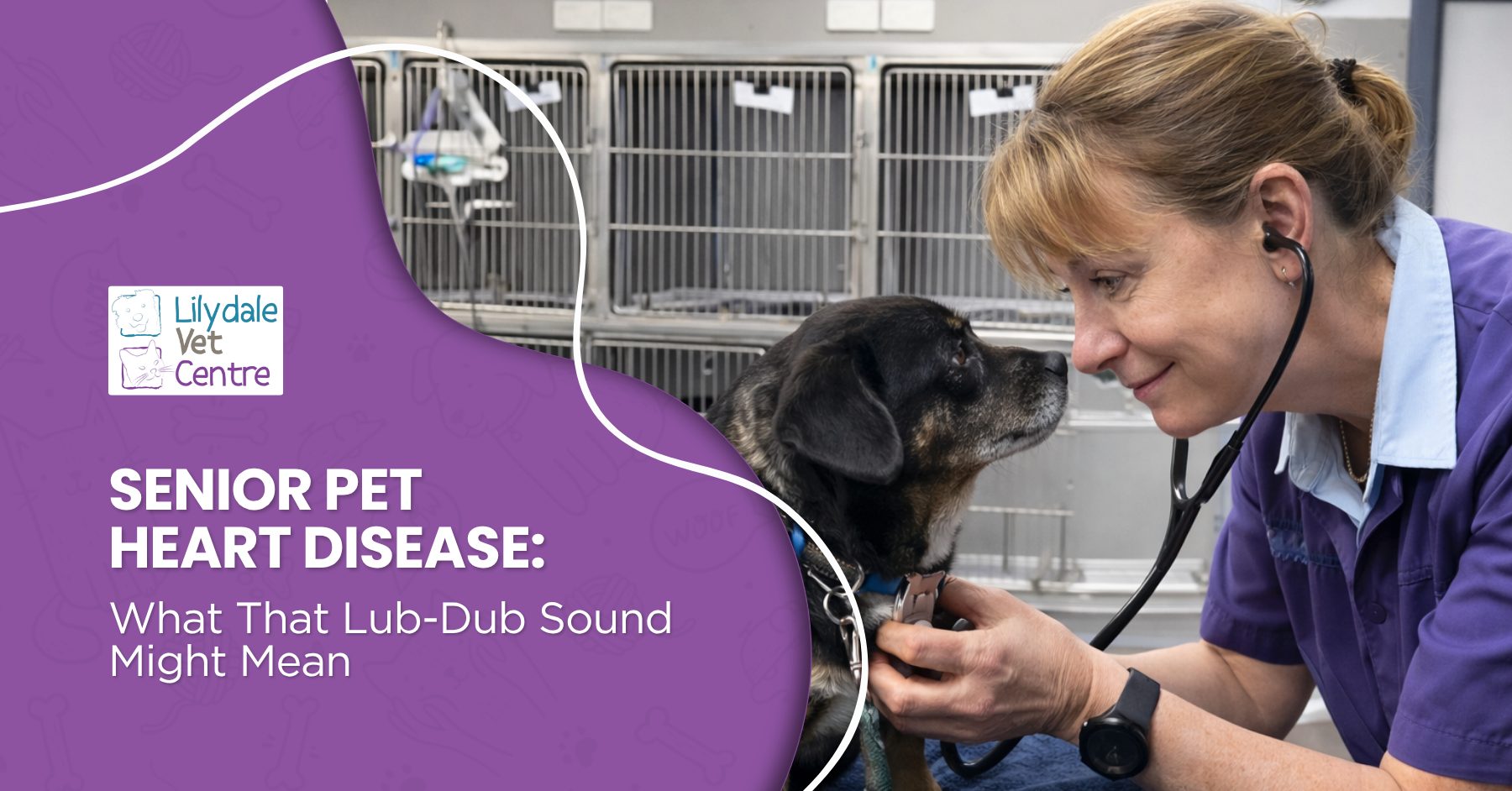
We all love the sounds of a happy home: a wagging tail on the floor or a gentle purr beside us. But as pets grow older, senior pet heart disease can quietly begin, changing the rhythm inside their chest.
Many senior pets still seem playful and happy, even when their heart and organs are starting to change. Catching that tiny shift in the “lub-dub” early can make a powerful difference to their comfort, health, and years ahead.
Understanding Senior Pet Heart Disease: The Mystery of the Murmur
In a healthy heart, valves work like one-way doors, snapping shut to push blood forward. This creates the crisp and familiar “lub-dub” sound we expect to hear.
However, by age 7, these valves can begin to change—especially in small-breed dogs. Instead of closing cleanly, a small amount of blood leaks backward with each beat.
To a vet’s stethoscope, this change sounds like a soft “whoosh” or an extra beat: the “Lub-e-te-dub.” This sound is called a heart murmur, and it’s the heart’s way of signalling that its mechanics may be changing.
In dogs, this is often Myxomatous Mitral Valve Disease (MMVD). In cats, a similar rhythm—sometimes called a gallop sound—can signal Hypertrophic Cardiomyopathy (HCM).
A murmur itself is not a disease. But it is an important early clue that deserves a closer look.
Seeing Beyond the Sound: On-Site Diagnostics
At Lilydale Vet Centre, we know how worrying it feels when something changes in your pet’s health. That’s why our preventative longevity approach focuses on finding answers early.
If we hear a change in the heartbeat, we investigate straight away using our on-site diagnostics. These tools help us see what the heart is doing behind that unusual sound.
Digital Chest X-rays measure the Vertebral Heart Score to check if the heart is enlarging.
Echocardiography (Ultrasound) lets us watch the heart beating in real time and detect leaking valves.
With clear answers, we can guide the right plan—helping protect your pet’s comfort, health, and years ahead.
The Silent Window of Opportunity
Many heart conditions develop quietly before any outward symptoms appear. During this pre-clinical stage, a pet may seem completely normal while the heart is already under strain.
Research shows early medication can delay heart failure by about fifteen months. That’s more than a year of extra walks, playtime, and quiet cuddles simply by acting early.
Early detection transforms a worrying discovery into an opportunity. Instead of reacting to illness later, we can support the heart before it struggles.
Supporting the Heart for the Long Run
Protecting heart health is about steady, consistent care. Alongside medication, several simple strategies help support the heart over time.
Prescription Cardiac Diets Specially formulated diets can reduce the workload placed on the heart.
Sleeping Breathing Rate Monitoring A simple home check where you count breaths while your pet sleeps peacefully. Healthy pets usually breathe fewer than 30 breaths per minute.
At Lilydale Vet Centre, we believe heart care should always remain accessible. That’s why our Furever Medications program provides essential treatments with no markups or hidden fees.
Because when medication is affordable, pets receive the consistent care they need.
Let’s Keep That Heart Beating Strong
Your pet’s heartbeat tells a story long before illness becomes visible. Sometimes it begins with nothing more than a tiny extra sound.
A simple check during a senior health exam can uncover that clue early. And early care can mean happier, more comfortable years together.
Let’s keep that heart beating strong, steady, and full of happy years ahead.
Is your itchy dog keeping you awake at night? The scratching, licking, and chewing can feel endless and heartbreaking.
Up to 40% of veterinary dermatology consultations involve itch. But what most pet parents think is the cause is often not quite right.
The Truth About Y...
As winter sets in, we pile on the layers and curl up in warm corners. But for older pets, the cold brings more than just a chill.
Stiff joints, slower steps, and hidden pain often get worse with cold weather. Thankfully, simple adjustments at home can go a long way in boost...